Wildlife Comparison Guide
Bison vs Buffalo
They share a name in American English and nothing else. One has a hump and a beard, the other has a slab of fused bone across its forehead, and they live on different continents. Here is what to look for.
Wildlife Comparison Guide
They share a name in American English and nothing else. One has a hump and a beard, the other has a slab of fused bone across its forehead, and they live on different continents. Here is what to look for.
In North America, the animal commonly called a "buffalo" is actually an American bison (Bison bison). True buffalo are found in Africa and Asia: the cape buffalo (Syncerus caffer) and the water buffalo (Bubalus bubalis). None of these three species share a continent in the wild, and they are not closely related enough to interbreed.
The shared name goes back to the 17th century, when French and English fur traders in North America called the unfamiliar animals les boeufs (the oxen) or "buffelo", terms they already used loosely for large bovids in Africa and Asia. That was about two hundred years before taxonomists erected the genus Bison in 1827, so "buffalo" is a name older than the classification that later made it imprecise, not a mistake against it. See the etymology page for the dates in order.
| Trait | Bison (North America / Europe) | Buffalo (Africa / Asia) |
|---|---|---|
| Scientific family | Bovidae (tribe Bovini) | Bovidae (tribe Bovini) |
| Genus | Bison | Syncerus (cape) / Bubalus (water) |
| Native continent | North America, Europe | Africa, Asia |
| Shoulder hump | Pronounced muscular hump | None or minimal |
| Horn shape | Short, upward curve (cattle-like) | Long, downward then upward sweep |
| Beard / shaggy coat | Heavy shaggy coat, beard on chin | Sparse, short coat, no beard |
| Adult male weight | 700-900 kg (1,540-2,000 lb) | Cape: 750 kg / Water: up to 1,200 kg |
| Conservation status | Near Threatened (IUCN) | Cape: Near Threatened / Water wild: Endangered |
| Domesticated? | No (ranching only, not truly domestic) | Water buffalo: yes (3,000+ years) |
One word in American English, three species, three continents.
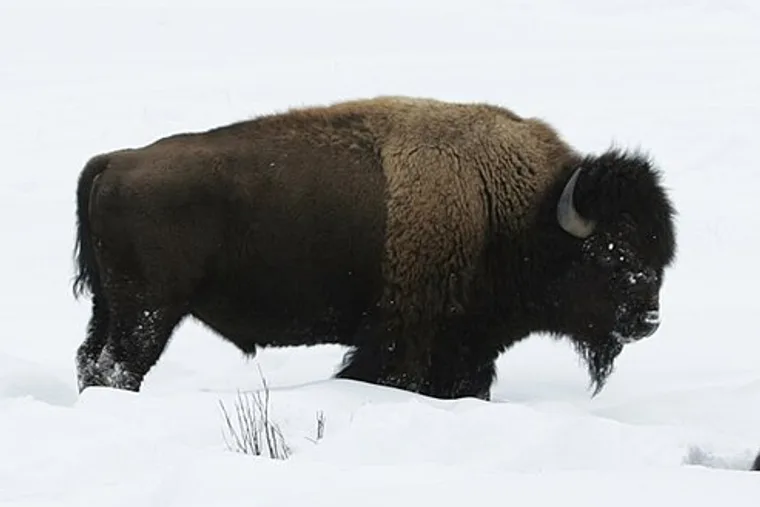
Bison bison
North America. The animal most North Americans call "buffalo". Near Threatened, recovered from fewer than 1,000 in the 1890s to around 500,000 today.
Read more →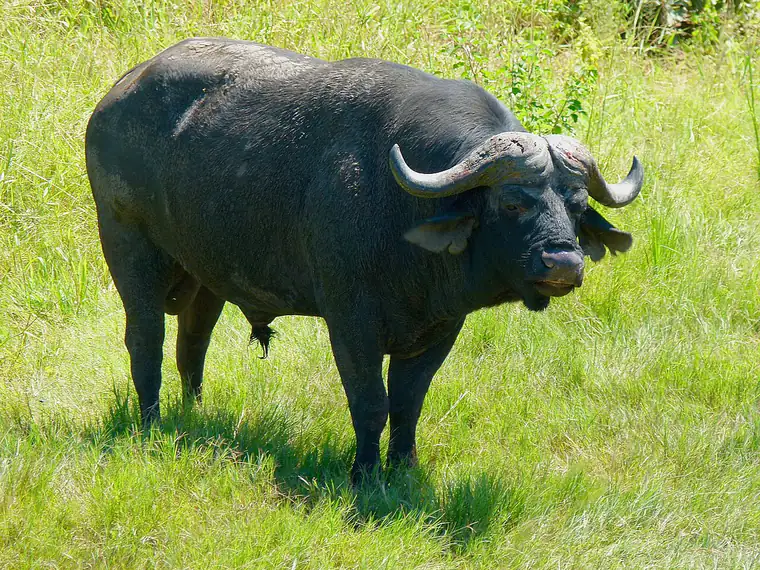
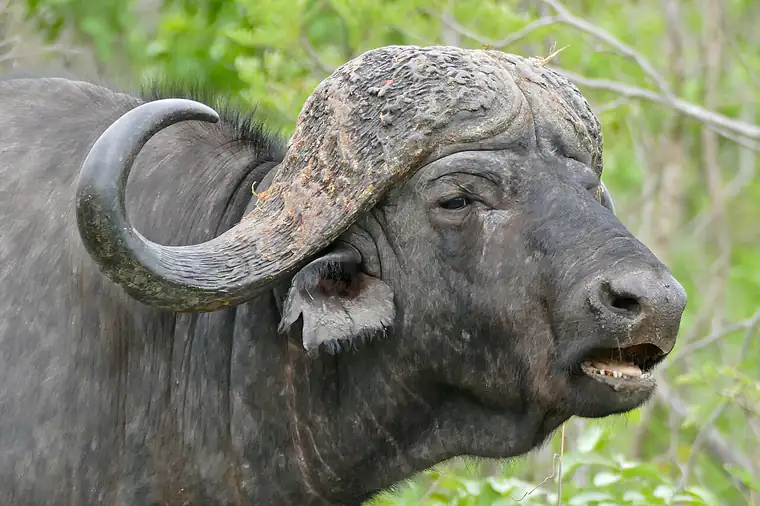
Syncerus caffer
Sub-Saharan Africa. One of the "Big Five" game animals, known for power and for holding a grudge. Near Threatened, around 400,000 and declining.
Read more →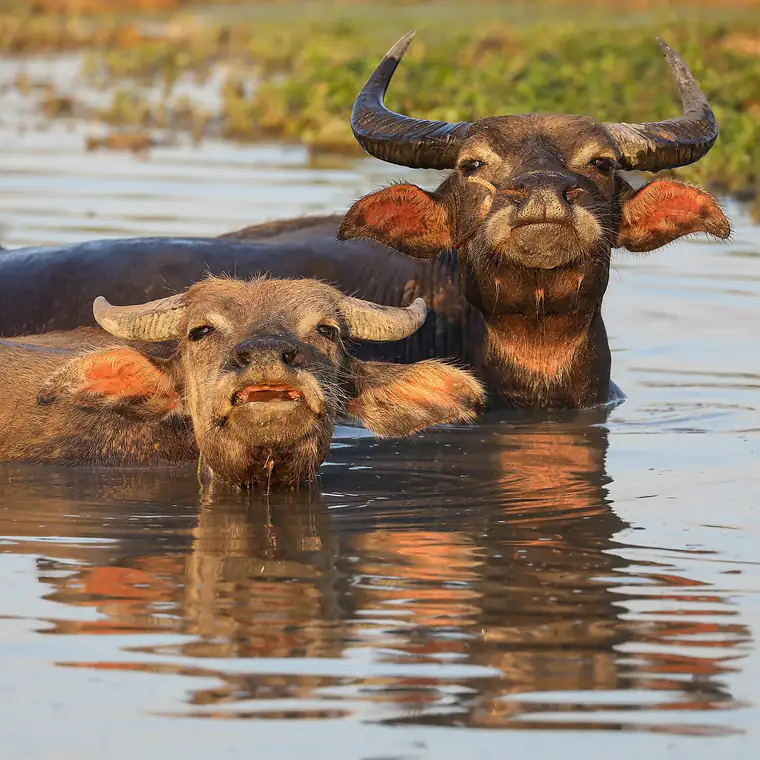
Bubalus bubalis
South and Southeast Asia. More than 200 million domestic animals, among the most important draft and dairy stock on Earth. The wild form is Endangered.
Read more →Both animals in profile, on the same ground line and to the same relative scale. Everything the eye needs is in the front half.
Drawn for BisonVsBuffalo.com. Shoulder heights are to relative scale against the figures on our size and weight page, and both animals stand on the same ground line. The dashed line runs at rump height on each animal, so the hump rises above it on the bison and the topline sits along it on the buffalo. Our own drawing, no licence attached: reuse it with a link back if it is useful to you.
The same differences written out, for when you are trying to remember them later.
Bison have a massive muscular hump over their front shoulders, visible even in calves. No true buffalo has this feature.
Bison horns curve upward and inward (short, compact). Cape buffalo have a distinctive boss: horns that sweep down from the skull then curve sharply upward.
Bison have a thick shaggy beard on the chin and a heavy mane across the neck and shoulders. Buffalo coats are comparatively sparse.
Bison carry a disproportionately large, low-slung head that often hangs near ground level. Buffalo heads are held higher relative to the shoulder line.
If you see it in North America, it is a bison. If you see it in Africa, it is a cape buffalo. If you see it working in a rice paddy in Asia, it is a water buffalo.
American bison range from dark brown to tan with a two-tone coat: darker in front, lighter behind. Cape buffalo are a uniform slate-black. Water buffalo are grey-black with sparse hair.
Hump, horns, beard, coat, head shape
Plains vs wood bison, recovery story
Big Five status, danger ranking
Domestic vs wild, agriculture role
Where each species lives today
Three species, three trajectories since 1800
Why Americans call bison buffalo
Another common confusion explained
Data tables with real figures
Yellowstone, Kruger, Wood Buffalo NP
IUCN, CITES, reintroduction progress
Indigenous peoples and mythology
Common questions answered
The features people notice first, explained one at a time.
The animals people most often size a bison up against.
Which is bigger, and the largest land mammal in North America
Two Yellowstone icons, and the elk vs wapiti naming muddle
Another common confusion, and the skull that gives it away
The two living Bison species, wisent and plains bison
Two shaggy northern bovids, side by side
The Asian highland bovid against the American bison
Four bovids, four genera, three continents, and the naming trap
Bull and cow figures for all three species
Updated 2026-06-09. Reviewed June 2026.